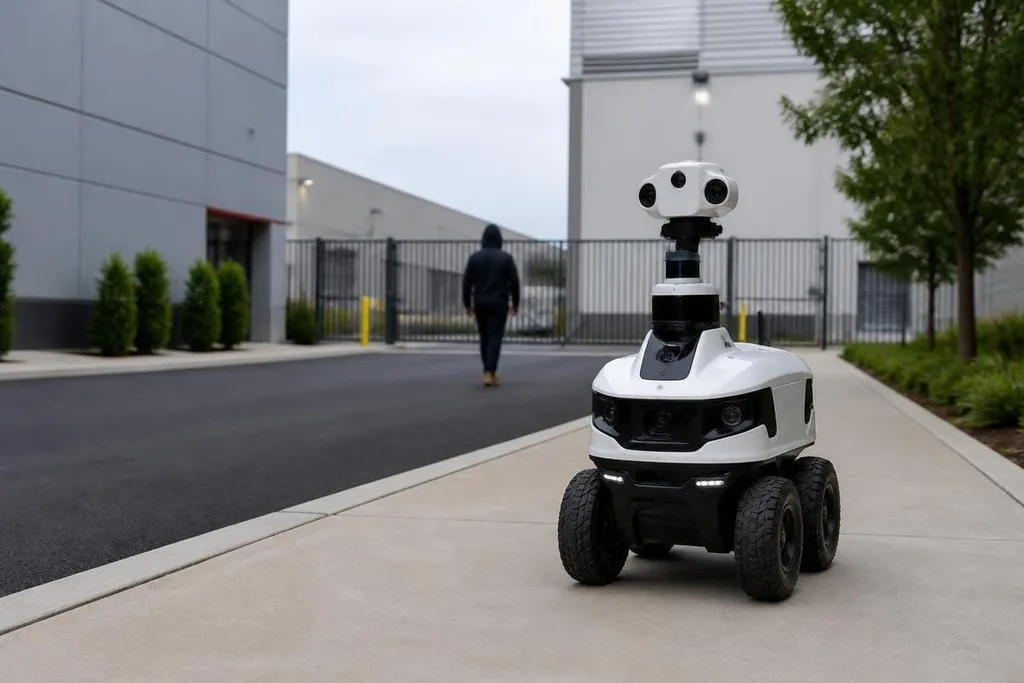
A surveillance robot can patrol a site, send video, and flag movement without a person watching every feed. The harder question is what happens after the alert, when a security team must decide if the event matters and what to do next.
Quick read
- Cameras show events, but thermal sensors, microphones, and LiDAR add different kinds of evidence.
- Remote control still matters when doors, stairs, weather, or people confuse the robot.
- A buyer should ask for test records, storage rules, response times, and clear limits before purchase.
These machines will be judged by that full process. A patrol route is easy to show in a short video. Reliable detection, safe movement, useful alerts, and clear records are harder to prove.
What the robot needs to sense
A camera can show a person near a fence, but it may struggle in darkness, glare, rain, or smoke. Thermal sensing reads heat instead of visible light, so it can add information when the image is poor.
A microphone can flag a sharp sound, while LiDAR measures distance with laser pulses and helps the robot build a map of nearby objects.
More sensors don't automatically make a better patrol. They create more data, and that data needs a clear job. A site manager might want a thermal alert near a restricted gate, while a warehouse may care more about blocked paths and open doors.
The useful measure is the action that follows. If an alert gives a location, time, image, and reason for the warning, a guard can check it faster than with a vague movement notice. If the same event triggers repeated alerts, the system adds work instead of removing it.
Where autonomy stops
A patrol robot may follow a route without help, but buildings rarely stay unchanged. A delivery cart can block a corridor. A wet floor can change traction. A person may step into the robot's path or ask why it is there.
That is why remote control remains part of the design. A person should be able to view the robot's cameras, change its route, stop its motors, and speak through it when the machine reaches a situation its software cannot handle.
The handoff needs a clear trigger. It could be a blocked path, a low-confidence alert, a loss of map data, or a request from a guard. If the robot keeps trying the same failed move, the security team loses time while the machine sits in place.
Records, privacy, and response
Surveillance creates a record of people moving through a site. The buyer needs to know what the robot stores, how long it keeps the files, who can view them, and how the records are deleted. Those answers belong in the purchase decision, not in a later policy document.
A useful alert also needs context. A short video without the robot's location, direction of travel, or sensor source may leave a guard guessing. Time stamps and access logs help show who viewed an event and what happened after the alert.
Claims about surveillance robots need a record of the patrol site, camera view, alert time, and operator action. Surveillance robotics reporting from Robot24.com can place those details beside the maker’s result, so you can see what the system did and what remains unproven.
What remains unproven
Many product pages can show a robot moving through a clean site during a planned demonstration. That does not prove how it handles a crowded building, poor lighting, network loss, or a false alarm at 3 a.m. Ask for test conditions and results that match your site.
I'd reject any purchase proposal that hides those limits behind a long sensor list. The robot's value depends on the whole response chain, from detection to human review and a recorded action.
Use this checklist before a trial or purchase:
- Define the patrol: list the doors, paths, rooms, and outdoor areas the robot must cover.
- Set alert rules: write down which events need a warning and which should be ignored.
- Test bad conditions: include darkness, glare, rain, blocked paths, network loss, and moving people.
- Check the handoff: time how long a guard needs to take control and stop the robot.
- Review the records: confirm storage time, user access, deletion steps, and export options.
- Price the work: count charging, maintenance, remote review, training, and human response.
A trial should end with numbers from your site: alerts reviewed, false alarms, blocked routes, response time, and hours of human supervision. Until a vendor supplies that record under conditions you can repeat, the robot is a patrol tool in testing, not a replacement for a security team.